EFB (Palm Oil Residue) SAF Conversion Project
Transforming EFB Waste into Clean Energy
From Environmental Burden to Resource Utilization!
New Value from Palm Oil Residue
Palm oil is a vegetable oil widely used in our daily lives, including in food, shampoo, soap, and cosmetics. By 2024, global production is expected to reach approximately 79 million tons, with about 80% concentrated in Southeast Asia. Due to its low cost and high yield, demand is projected to continue growing. However, this expansion presents several challenges.
One such issue is the residue left after oil extraction, known as EFB (Empty Fruit Bunch). This is a significant byproduct generated from harvested FFB (Fresh Fruit Bunch) of oil palm. Approximately 20% of the total weight of FFB becomes EFB.
Currently, EFB is typically dried and spread as compost across plantations, with most of it going unused. If not properly treated, it emits methane, a potent greenhouse gas, and can lead to methane emissions and pest infestations, harming palm trees. In the past, incineration was used as a disposal method, but this has been banned in many areas due to environmental concerns.
While some countries have promoted the use of EFB as biomass fuel, its high potassium content and moisture levels have caused problems such as clinker formation in boilers. This has made practical use extremely difficult.
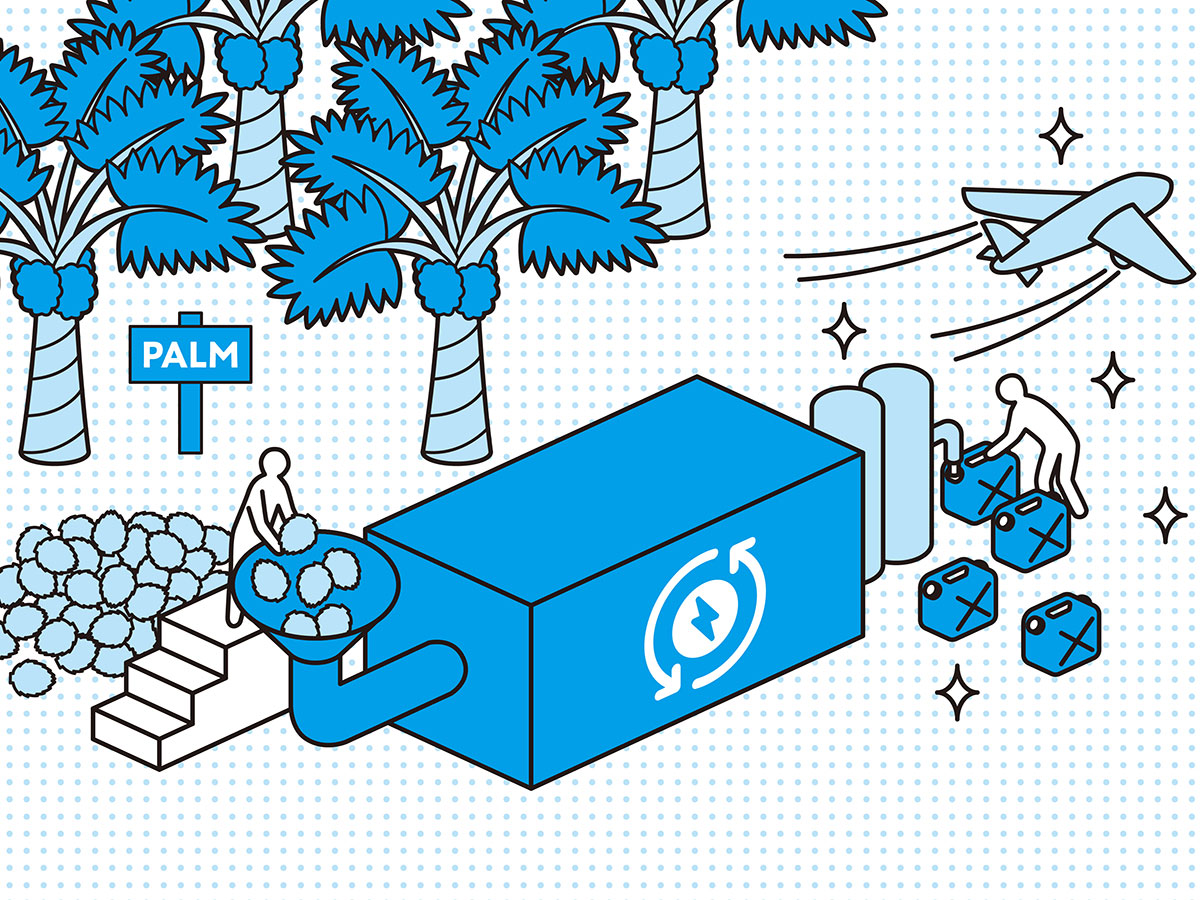
Our proprietary WTE system (EnviroFusion) processes EFB in an oxygen-free environment. This suppresses emissions caused by chlorine and allows the recovery of energy in the form of combustible gas and oil. The system also makes it possible to convert EFB into next-generation fuels such as SAF (Sustainable Aviation Fuel). Demonstration projects using this technology are currently underway in Southeast Asia.
This project aims to provide a sustainable solution for EFB, which has been difficult to handle and costly to manage. By creating new value from palm oil residue, we aim to ease the environmental burden of the palm oil industry and support the development of a circular economy in Southeast Asia.